Most professionals hit 500 LinkedIn connections and feel a quiet sense of accomplishment. Then they try to actually meet one of those people for coffee and the whole thing stalls. You send a message, they respond three days later, you suggest a time, it doesn't work, you suggest another, they go quiet. Six weeks pass. The moment is gone.
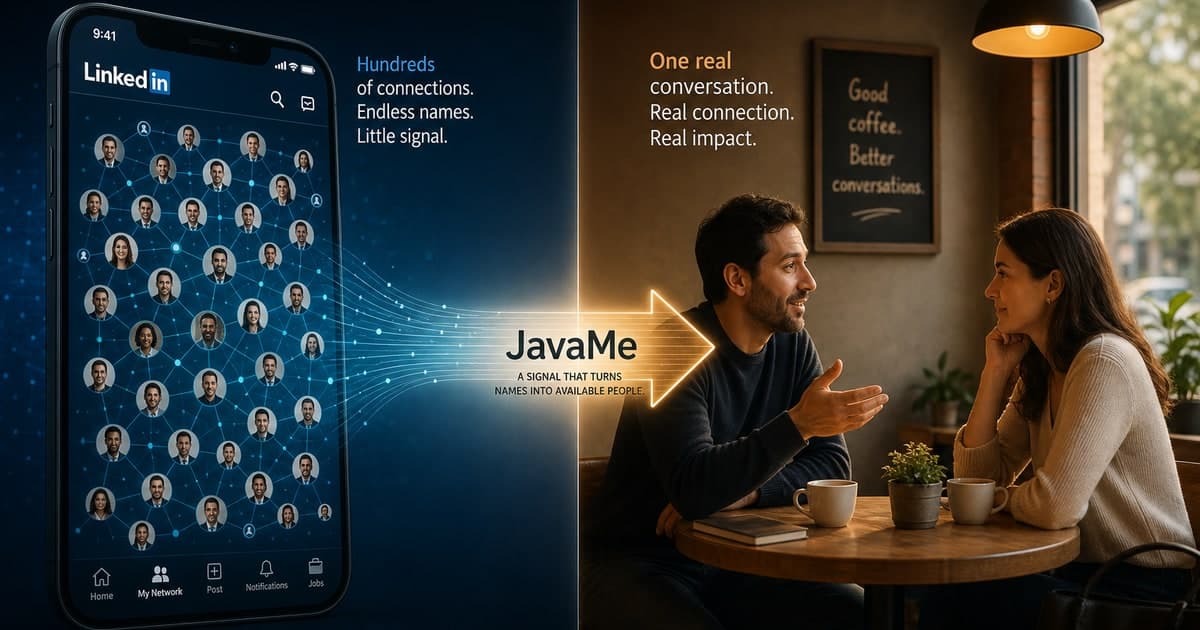
This isn't a willpower problem. It's a mechanics problem. LinkedIn optimized for accumulating connections, not for turning them into real interactions. The platform is great at surface-level visibility and terrible at presence. You know someone exists. You have no idea if they're free, nearby, or open to meeting. That gap, between knowing someone's name and actually sitting across from them, is where most professional relationships quietly die.
Why Bigger Networks Produce Fewer Real Meetings
There's a ceiling effect that kicks in once a network gets large. When you have 50 connections, reaching out to one feels meaningful. When you have 500, each one feels like a smaller fraction of your attention, and theirs. The signal-to-noise ratio collapses. Add to that the friction of scheduling and most people just don't bother initiating. One Forbes piece from mid-2025 put it plainly: professionals are maintaining larger networks than ever while reporting fewer substantive in-person interactions than at any point in the last decade.
The irony is that an in-person coffee, even a 20-minute one, does more for a professional relationship than six months of LinkedIn likes. Actual face time accelerates trust in a way that no amount of content engagement replicates. People make decisions about referrals, collaborations, and hiring based on how someone felt in person, not how their posts performed. The coffee is the whole thing. Getting to it is the obstacle.
From a Digital Name to an Available Person
What's missing isn't a better messaging feature. It's a signal. Something that tells you when a connection is actually free, nearby, and open to meeting right now. That's what JavaMe does in practice. You set a window of availability and a preferred nearby venue, a cafe, a library, a co-working lobby, and you become visible to people who might want to meet. No thread. No scheduling back-and-forth. Someone sees you're free, suggests the time and place, and it either happens or it doesn't.
For a LinkedIn connection you've been meaning to follow up with, this changes the dynamic entirely. Instead of opening a cold message and hoping the scheduling stars align, you can flip on availability when you're already heading somewhere public. If they happen to be nearby and open, the meeting finds itself. The effort drops from 30 minutes of coordination to roughly 30 seconds of signaling. That's the actual fix: not a smarter calendar, but a lower-cost way to show up as available in the physical world.
The professionals who are good at turning digital contacts into real relationships have always understood one thing: you have to make it easy for the other person to say yes. JavaMe is just a more honest version of that instinct, built for the way most people actually move through their day.